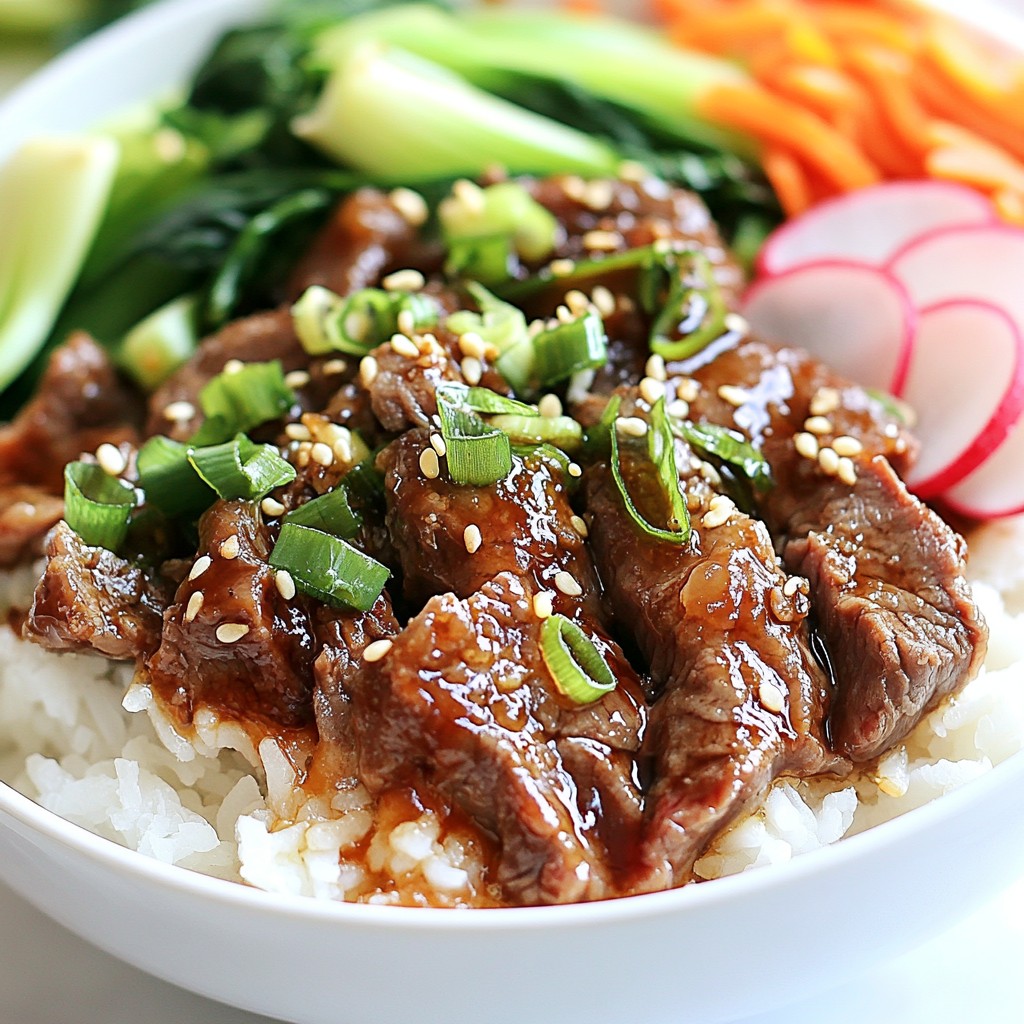
If you're looking for a quick and tasty dinner, Korean Beef Bulgogi Bowls are perfect! This dish packs bold flavors while being simple to prepare. In this article, I'll walk you through the easy steps to make these delicious bowls, share ingredient tips, and offer tricks for perfecting your beef. You'll impress your family and friends with this tasty meal in no time. Let’s dive in and get cooking!
Why I Love This Recipe
- Delicious Flavor Combination: This recipe brings together a perfect blend of sweet, savory, and spicy flavors that are characteristic of Korean cuisine.
- Quick and Easy Preparation: With a total time of just 40 minutes, this dish is perfect for busy weeknights while still being impressive enough for guests.
- Customizable Ingredients: You can easily swap out vegetables or adjust the spice level to suit your preferences, making it versatile for everyone.
- Healthy and Satisfying: This bowl is filled with lean protein and fresh vegetables, making it a nourishing option that doesn’t compromise on taste.
Ingredients
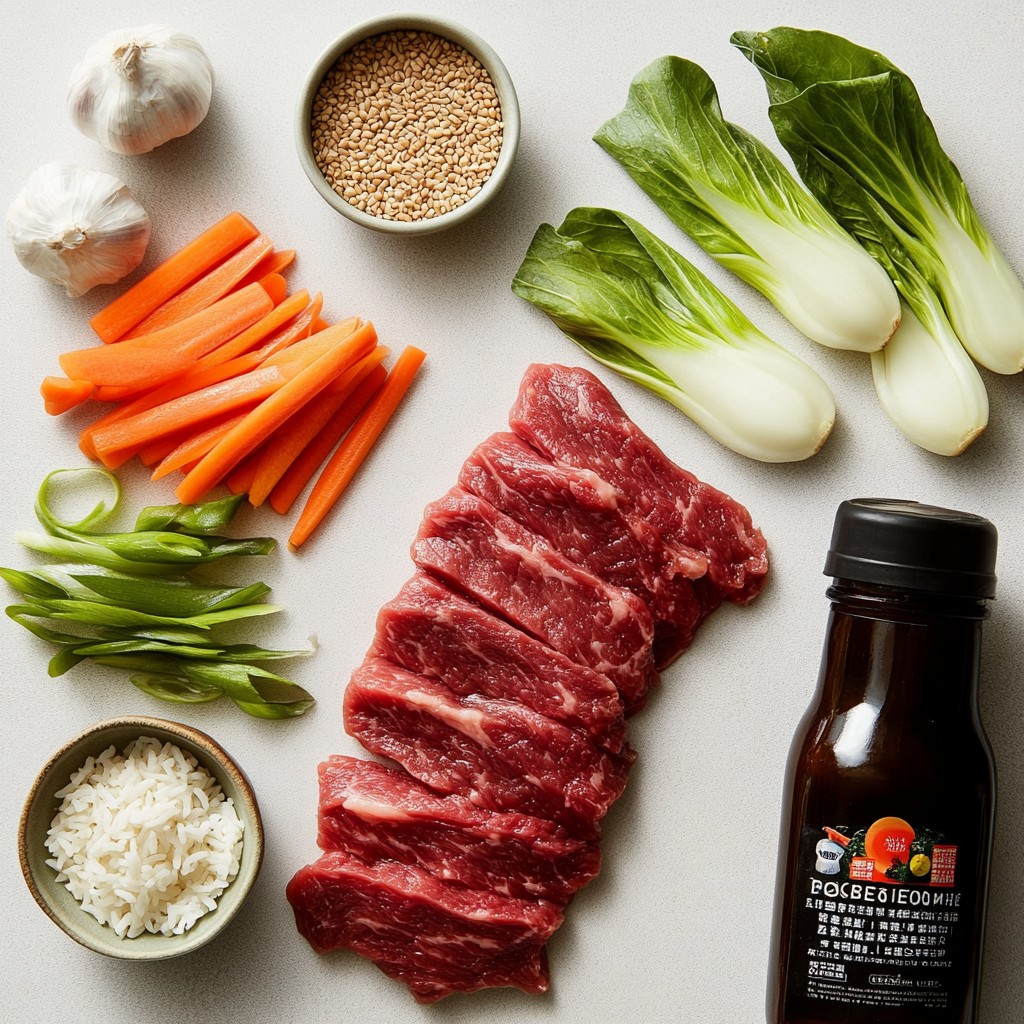
Main Ingredients for Beef Bulgogi
- 1 pound beef sirloin, thinly sliced
- 1/4 cup soy sauce
- 2 tablespoons brown sugar
- 2 tablespoons sesame oil
For beef bulgogi, the main player is beef sirloin. It is tender and full of flavor. Soy sauce adds saltiness and depth. Brown sugar gives a nice hint of sweetness. Sesame oil adds a rich, nutty taste.
Additional Ingredients
- 3 cloves garlic, minced
- 1 tablespoon ginger, grated
- 1 tablespoon gochujang (Korean chili paste)
- 1 teaspoon black pepper
- 1 cup julienned carrots
- 1 cup bok choy or spinach
- 2 tablespoons green onions, chopped
- Sesame seeds for garnish
- Sliced radishes for garnish
Garlic and ginger bring a zesty kick. Gochujang gives a spicy flavor that makes this dish exciting. Black pepper adds a touch of heat. Fresh veggies like carrots and bok choy add crunch and color. Green onions and sesame seeds make the dish look pretty.
Serving Suggestions
- 1 cup cooked rice (white or brown)
When serving, you can use either white or brown rice. Rice acts as a nice base for the beef and veggies.
For garnishing, sliced radishes add freshness. You can also sprinkle extra green onions on top for a pop of color. Enjoy these bowls filled with flavor and texture!
Step-by-Step Instructions
Marinating the Beef
To start, you need to prepare the marinade. In a bowl, mix:
- 1/4 cup soy sauce
- 2 tablespoons brown sugar
- 2 tablespoons sesame oil
- 3 cloves minced garlic
- 1 tablespoon grated ginger
- 1 tablespoon gochujang
- 1 teaspoon black pepper
Whisk these ingredients well until the sugar dissolves. Next, take your 1 pound of thinly sliced beef sirloin and add it to the marinade. Make sure each piece is well-coated. Cover the bowl with plastic wrap and let it sit in the fridge for at least 30 minutes. This step helps the beef soak up all those rich flavors.
Cooking the Beef
Now, it's time to cook the beef. Heat a large skillet over medium-high heat. Once hot, remove the beef from the marinade, but keep that marinade for later. Cook the beef for about 3-4 minutes. Stir it often so it cooks evenly. You want it browned and cooked through. This technique ensures your beef stays tender and juicy.
Preparing the Vegetables
While the beef cooks, prepare the vegetables. After the beef is done, add the reserved marinade to a separate pan. Bring it to a simmer for about 2-3 minutes until it thickens slightly. In the same skillet with the beef, toss in 1 cup of julienned carrots and 1 cup of bok choy or spinach. Stir-fry these for about 2-3 minutes. You want them tender but still crisp.
Assembling the Bowls
Now it’s time to put everything together. Start with a base of 1 cup of cooked rice in each bowl. Next, layer the beef and vegetable mixture on top. Drizzle the thickened marinade over everything. For the final touches, sprinkle with chopped green onions and sesame seeds. Add sliced radishes on the side for a fresh crunch. Enjoy your Korean beef bulgogi bowls!
Tips & Tricks
Choosing the Right Beef
- Best cuts for Bulgogi: The best cut for Bulgogi is beef sirloin. It is tender and flavorful. You can also use ribeye or flank steak for a tasty option.
- Slicing techniques: Slice the beef thinly against the grain. This helps the meat stay tender when cooked. Aim for slices about 1/8 inch thick for quick cooking and easy eating.
Marinade Tips
- How long to marinate: Marinate the beef for at least 30 minutes. For even better flavor, try to marinate for a few hours or overnight. This time allows the flavors to soak in deeply.
- Enhancing flavor profiles: To enhance the flavor, add more garlic or a splash of rice vinegar. You can also mix in a little honey for extra sweetness.
Cooking Techniques
- Skillet vs. grill pan: Both a skillet and a grill pan work well. A skillet gives you even heat, while a grill pan adds nice grill marks. Choose based on your preference.
- Tips for even cooking: Cook the beef in batches if needed. This keeps the pan from overcrowding and helps the beef brown evenly. Stir frequently to avoid burning and to ensure all pieces cook through.
Pro Tips
- Marinate Longer for Depth: For an even richer flavor, marinate the beef for 1-2 hours or overnight if time allows.
- Use Fresh Ingredients: Fresh garlic and ginger will enhance the overall taste of the dish compared to pre-minced versions.
- Adjust Heat Levels: If you prefer a milder dish, reduce the amount of gochujang or substitute with a milder chili paste.
- Customize Your Veggies: Feel free to add other vegetables like bell peppers or zucchini for more color and nutrition.
Variations
Alternative Proteins
You can switch out beef for chicken, tofu, or pork. Chicken thighs work well for a juicy option. Tofu gives a nice plant-based twist. Just press the tofu to remove excess water. For pork, try thinly sliced pork tenderloin. Each option offers a unique taste while keeping it simple.
Dietary Adjustments
For a gluten-free version, use tamari instead of soy sauce. Many brands offer gluten-free gochujang too, so check labels. If you want a vegetarian meal, tofu is great. You can also add more veggies to fill your bowl. Try mushrooms or bell peppers for added flavor.
Flavor Variations
You can adjust spice levels to fit your taste. If you like it mild, use less gochujang. For more heat, add extra gochujang or some chili flakes. You can swap ingredients too. Try honey instead of brown sugar for sweetness. This keeps the flavor rich and tasty. Experiment and find what you love!
Storage Info
Storing Leftovers
To store cooked Bulgogi, let it cool first. Then, place it in an airtight container. Keep it in the fridge for up to three days. To maintain freshness, lay a paper towel inside the lid. This helps absorb moisture and keeps the beef tender.
Reheating Tips
For the best reheating method, use a skillet over medium heat. Add a splash of water or broth to keep the beef moist. Heat for about 5 minutes, stirring often. This helps keep the texture soft and flavorful. You can also use the microwave. Heat in short bursts, stirring in between.
Meal Prep Ideas
Making ahead is easy with Bulgogi. Marinate the beef a day in advance. This way, you're ready to cook on busy nights. You can also freeze the cooked beef. Place it in a freezer-safe bag, removing as much air as possible. It can last for up to three months. When ready to eat, thaw in the fridge overnight before reheating.
FAQs
What is Bulgogi?
Bulgogi is a Korean dish made from marinated beef. It means "fire meat" in Korean. The beef is usually sirloin, sliced very thin. The marinade is a mix of soy sauce, garlic, and sugar. This dish first appeared in Korea over 500 years ago. Bulgogi is popular for its sweet and savory taste. It’s often grilled or stir-fried, giving it a nice char.
Can I make this dish ahead of time?
Yes, you can make Bulgogi ahead of time. Marinate the beef the night before. This gives the meat more flavor. Cook the beef and veggies, then cool them before storing. Keep leftovers in an airtight container. You can store them in the fridge for up to 3 days. Reheat in a skillet or microwave before serving.
What to serve with Korean Beef Bulgogi Bowls?
You can serve Bulgogi with many sides. Try kimchi, a spicy fermented vegetable dish. It adds a nice crunch and tang. You could also serve pickled radishes for a fresh bite. Another option is to add steamed rice or noodles. For drinks, serve with cold tea or a light beer. These pair well with the rich flavors.
How spicy is Gochujang?
Gochujang is a Korean chili paste. It has a mild to medium spice level. It adds heat but also sweetness. If you want less spice, use less Gochujang. You could also mix it with honey or sugar to tone it down. For a different taste, try red pepper flakes or sriracha.
Beef Bulgogi is a rich and tasty dish. We explored its main ingredients, like beef sirloin and soy sauce. I shared step-by-step instructions, from marinating the beef to assembling bowls. You also learned tips on choosing the best beef and cooking techniques.
The recipe can fit many diets with variations for proteins and flavors. With proper storage, you can keep leftovers fresh and ready. Enjoying this meal is simple and fun. Try making your own Beef Bulgogi and impress your friends and family with your cooking skills!