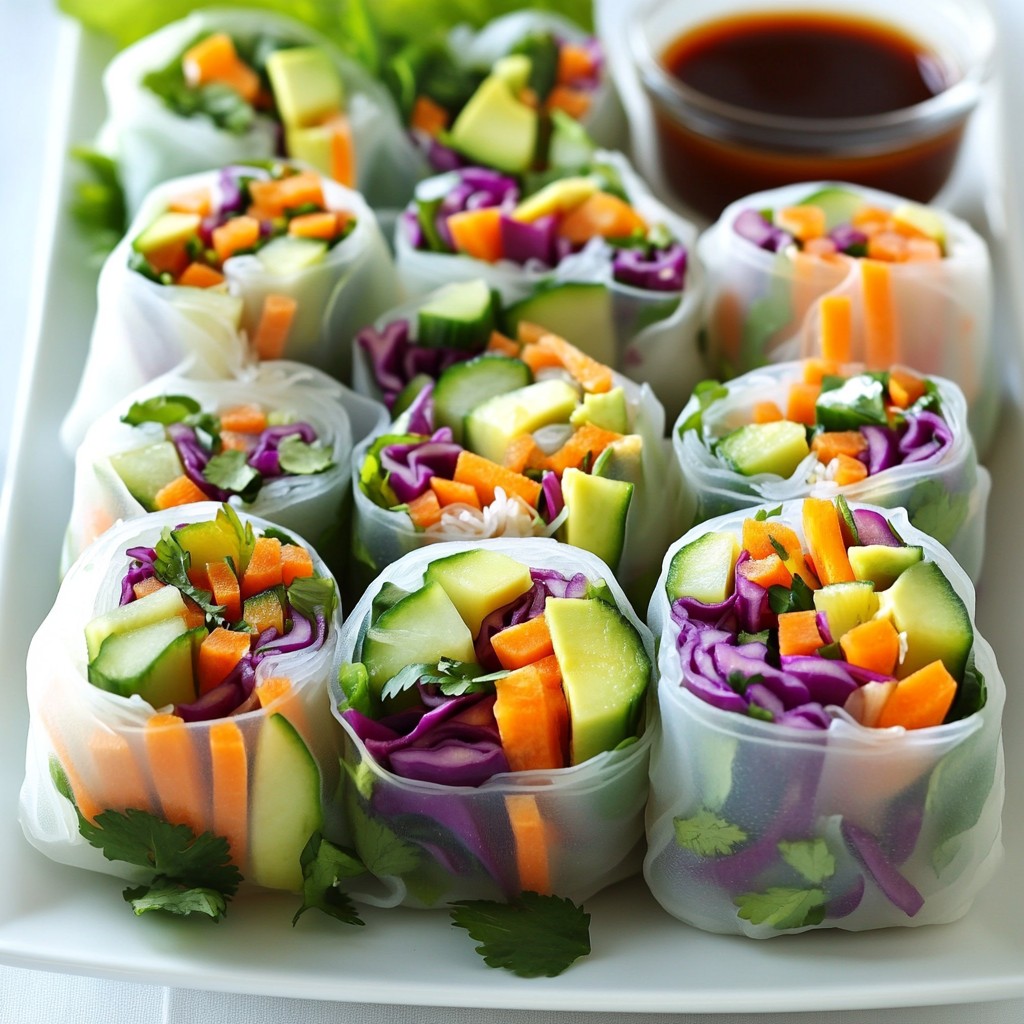
Looking for a fresh and colorful snack? Discover how to make Rainbow Veggie Spring Rolls that are both fun and tasty! With vibrant veggies and easy-to-follow steps, you’ll impress yourself with this healthy treat. Perfect for parties, lunches, or anytime you crave something light, this guide shares everything you need to know about ingredients, rolling techniques, and flavor boosts. Let’s dive in and start rolling!
Why I Love This Recipe
- Fresh and Colorful: These spring rolls are packed with vibrant vegetables that not only look beautiful but also provide a plethora of nutrients.
- Customizable: You can easily swap in your favorite veggies or proteins, making this recipe versatile for any taste preference.
- Light and Healthy: Spring rolls are a great option for a light meal or appetizer, keeping you satisfied without feeling heavy.
- Fun to Make: Rolling your own spring rolls can be a fun activity, perfect for gatherings or cooking with family and friends.
Ingredients
List of Required Ingredients
- 8 rice paper wrappers
- 1 cup shredded purple cabbage
- 1 cup julienned carrots
- 1 cup cucumber, julienned
- 1 red bell pepper, thinly sliced
- 1 avocado, sliced
- 1 cup fresh mint leaves
- 1 cup fresh cilantro leaves
- ½ cup vermicelli noodles, cooked
- Soy sauce or peanut sauce for dipping
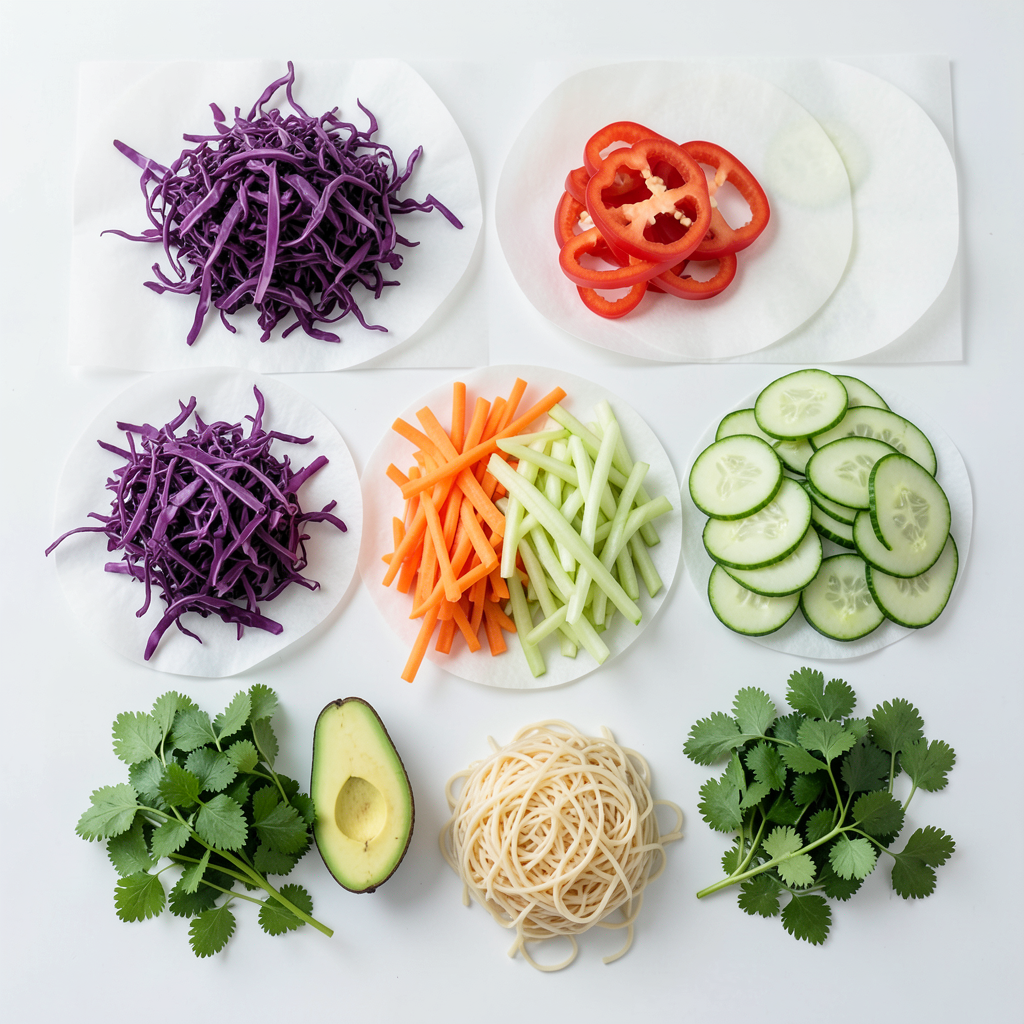
When making rainbow veggie spring rolls, fresh vegetables are key. Each color adds flavor and nutrition. For the cabbage, choose a deep purple color. Fresh carrots should be crisp. Select cucumbers that feel firm. Look for a red bell pepper with smooth skin. A ripe avocado is slightly soft to the touch.
For herbs, use bright green mint and cilantro. Fresh herbs give your rolls a burst of flavor. When buying produce, always check for quality. If possible, buy from local farmers or markets. They often have fresher options.
You can also add vermicelli noodles for texture. These noodles make your rolls more filling. For dipping, I recommend soy sauce or peanut sauce. Both add a savory kick. Enjoy picking high-quality ingredients. They make a big difference in taste!
Step-by-Step Instructions
Preparation of Vermicelli Noodles
First, boil water in a pot. Add the vermicelli noodles and cook them according to the package. This usually takes about 3-5 minutes. Once they are soft, drain them in a colander. Rinse the noodles under cold water. This cools them down and stops the cooking. Set the noodles aside for later use.
Soaking Rice Paper Wrappers
Grab a large, shallow dish and fill it with warm water. Take one rice paper wrapper and dip it in the water for about 10-15 seconds. You want it to become soft and pliable. Be careful not to soak it too long, or it will tear.
Assembling the Spring Rolls
Place the softened rice paper on a clean surface. In the center, layer a small handful of shredded purple cabbage, julienned carrots, cucumber, and red bell pepper. Add a slice of avocado, a few mint leaves, cilantro leaves, and a small amount of the cooled vermicelli noodles. Now, fold the sides of the rice paper over the filling. Roll from the bottom to the top tightly. Make sure all the fillings are secure inside. Repeat this for all the wrappers and filling.
Serving Suggestions
Once you prepare all the spring rolls, arrange them on a vibrant platter. Add extra mint leaves for a pop of color. Serve with soy sauce or peanut sauce in a small bowl for dipping. This makes your dish inviting and fun!
Tips & Tricks
Best Practices for Rolling Spring Rolls
To keep your rice paper wrappers from tearing, start with warm water. Dip each wrapper for just 10-15 seconds. If you soak them too long, they get too soft. Lay the wrapper on a clean surface to make rolling easier. When packing the filling, use a small amount. This helps avoid spills and keeps your rolls tight.
Enhancing Flavor and Nutrition
To boost flavor, consider adding fresh herbs like basil or dill. You can also sprinkle some sesame seeds for a nice crunch. For extra nutrition, add nuts like peanuts or almonds. These not only improve taste but also add healthy fats and protein.
Troubleshooting Common Issues
If your wrappers turn soggy, try using less water when soaking. Also, keep your filling dry to prevent moisture. If your filling spills out when rolling, make sure to pack it tightly. Rolling from the bottom up can help hold everything in place.
Pro Tips
- Fresh Ingredients: Always use the freshest vegetables and herbs for the best flavor and texture in your spring rolls.
- Rice Paper Handling: Don't soak the rice paper too long; just enough to be pliable, or it will tear during rolling.
- Layering Technique: Layer your ingredients in the center of the rice paper, leaving space on the edges to fold securely.
- Chill Before Serving: Refrigerate the finished spring rolls for 15 minutes before serving to help them set and enhance the flavor.
Variations
Alternative Fillings
You can switch up the veggies in your spring rolls. Try adding thinly sliced radishes for crunch. You can also use shredded lettuce for a fresh taste. Bell peppers come in many colors. Try yellow or green for more variety. If you like it spicy, add some jalapeño slices.
For protein, consider tofu or shrimp. Firm tofu works well when marinated. Shrimp adds a nice touch of sweetness. You can cook shrimp quickly in a pan. Just be sure to cool them before adding to your rolls.
Dipping Sauce Alternatives
You can make your own dipping sauces at home. A simple peanut sauce is easy and tasty. Mix peanut butter, soy sauce, and a splash of lime juice. You can also add a bit of honey for sweetness. If you want a fresh taste, try a lime-chili sauce.
If you prefer store-bought options, look for hoisin sauce or sweet chili sauce. These are great for a quick and easy dip. Always check the label for extra flavoring.
Gluten-Free and Vegan Options
To make gluten-free spring rolls, use rice paper only. It is naturally gluten-free. For a vegan version, skip any seafood or meat. Use vegetables and tofu for protein instead. You can replace the soy sauce with a gluten-free option.
For the vermicelli noodles, check that they are made from rice. Many brands offer gluten-free noodles. If you want a little crunch, add nuts or seeds. They bring extra texture and flavor to your rolls.
Storage Info
How to Store Leftover Spring Rolls
To keep your leftover spring rolls fresh, use an airtight container. A glass container works well. Place a damp paper towel in the container. This helps maintain moisture without making the rolls soggy. Space the rolls apart to avoid sticking. If you stack them, place parchment paper between each layer.
Best Practices for Reheating
When it’s time to reheat, avoid the microwave. It can make the wrappers chewy. Instead, use a skillet. Heat it on low and add a few drops of water. Cover the skillet to create steam. This warms the rolls gently and keeps them soft. You can also try a steamer for a similar effect. Just steam for a few minutes until heated through.
Shelf Life Considerations
In the fridge, spring rolls last about 2 to 3 days. If you want them to last longer, consider freezing them. Wrap each roll in plastic wrap and place them in a freezer bag. They can stay fresh for up to a month in the freezer. When ready to eat, thaw in the fridge and reheat as mentioned above.
FAQs
Can I make rainbow veggie spring rolls ahead of time?
Yes, you can make rainbow veggie spring rolls ahead of time. For best storage, wrap each spring roll in plastic wrap. Place them in an airtight container. Keep them in the fridge. They stay fresh for about one day. If you want to make them more than a day in advance, store the filling and wrappers separately. This way, the rice paper stays dry and does not tear.
What can I do if I can’t find rice paper?
If you can’t find rice paper, don’t worry! You can use other wraps. Lettuce leaves work great as a substitute. They add a nice crunch and are low in calories. You can also try using thin tortillas or even crepes. Just make sure they are flexible enough to roll without breaking.
How do I keep spring rolls from sticking together?
To prevent spring rolls from sticking together, follow some easy steps. First, dust them lightly with cornstarch or rice flour. This helps absorb moisture. Use a clean plate or tray lined with parchment paper for serving. When stacking, place parchment paper between each roll. This keeps them from touching and sticking.
Making spring rolls is fun and simple. This guide covered all you need: fresh ingredients, step-by-step cooking, and tips for rolling. You learned how to enhance flavor, troubleshoot issues, and adapt for different diets.
Now, as you create your spring rolls, remember that practice makes perfect. Enjoy experimenting with fillings and flavors. Your spring rolls can impress friends and family. Dive in, and happy rolling!