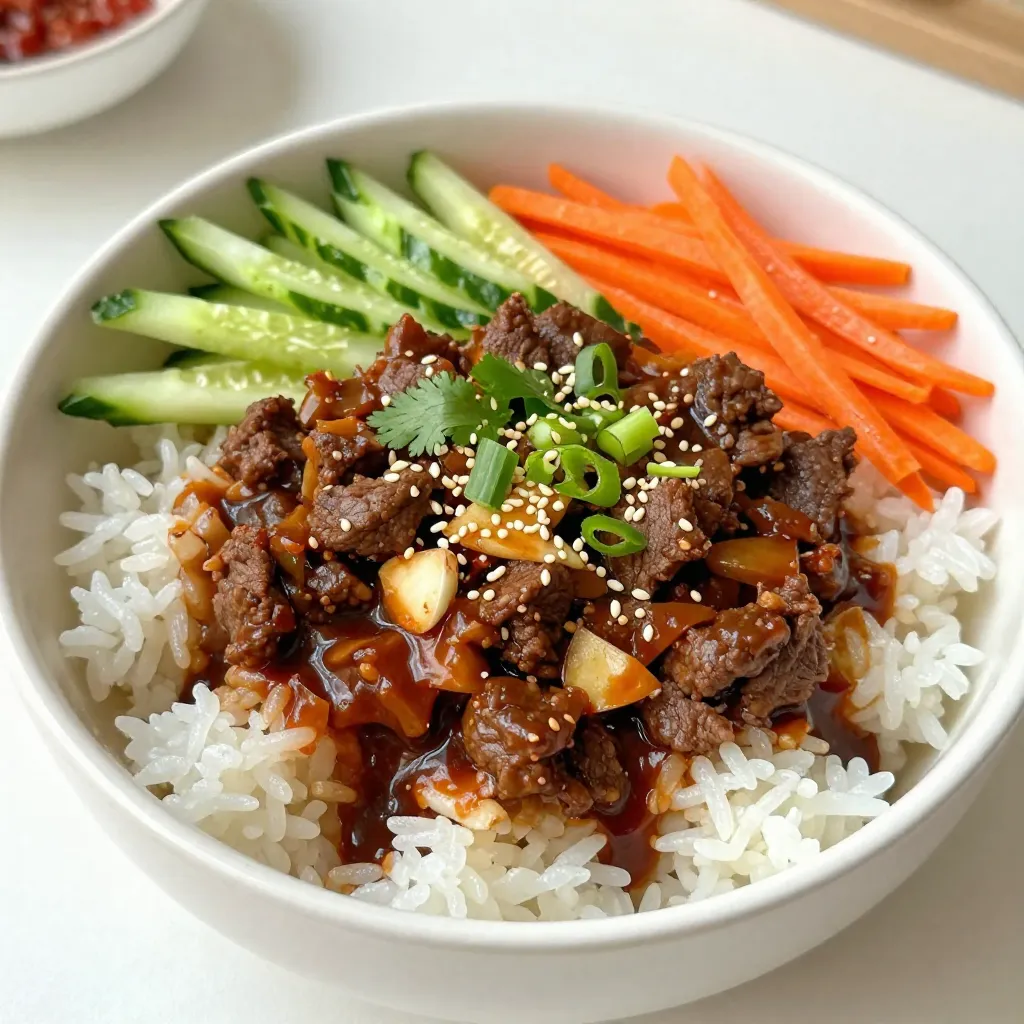
Spicy Korean Beef Bowls Flavorful and Easy Meal Prep

WANT TO SAVE THIS RECIPE?

Craving a bold, tasty meal that’s simple to prepare? Look no further! My Spicy Korean Beef Bowls are packed with flavor and perfect for meal prep. With just a few fresh ingredients and easy steps, you’ll have a delicious dish that impresses. Plus, I’ll share tips on customizing it for different diets and spice levels. Dive into this savory journey for a satisfying, easy win in the kitchen!

Why I Love This Recipe

  1. Bold Flavors: This recipe combines the rich taste of beef with the spicy kick of gochujang, creating a flavor explosion in every bite.
  2. Quick and Easy:
  3. Customizable: You can easily add more veggies or adjust the spice level to suit your taste, making it a versatile meal option.
  4. Beautiful Presentation: The colorful layers of rice, beef, and fresh vegetables not only taste great but also look stunning on the plate.

Ingredients

List of Ingredients with Measurements

– 1 lb ground beef (80/20)

– 4 cloves garlic, minced

– 1 inch ginger, grated

– 1/4 cup soy sauce (low sodium)

– 2 tablespoons brown sugar

– 2 tablespoons gochujang (Korean chili paste)

– 1 tablespoon sesame oil

– 1 teaspoon rice vinegar

– 2 green onions, sliced (white and green parts separated)

– 1 cup cooked jasmine rice

– 1 cup shredded carrots

– 1 small cucumber, thinly sliced

– Sesame seeds for garnish

– Fresh cilantro for garnish

– Optional: Kimchi for serving

Tips for Choosing Quality Ingredients

When picking ground beef, look for meat with a good fat content. Ground beef that is 80/20 is perfect for flavor. Fresh garlic and ginger make a big difference in taste. Choose firm, vibrant carrots and cucumbers for crunch. Look for low-sodium soy sauce to keep the dish balanced. Finally, always check the expiration date on gochujang.

Substitutions for Allergies or Dietary Preferences

For a gluten-free option, use tamari sauce instead of soy sauce. If you want a leaner meat, ground turkey or chicken works well. For a vegetarian dish, try using lentils or tofu instead of beef. If you are allergic to sesame, use a different oil, like canola or olive oil. You can skip the gochujang if you need a milder taste, but add some chili powder for flavor.

Step-by-Step Instructions

Cooking the Beef

Start by heating a large skillet on medium-high heat. Add 1 pound of ground beef. Cook it for about 5 to 7 minutes. Use a spatula to break the beef apart as it cooks. You want it to brown nicely. If there’s extra grease, drain it off. This step keeps the dish from being too oily.

Adding Aromatics and Spices

Next, add 4 cloves of minced garlic and 1 inch of grated ginger to the beef. Sauté them for 1 to 2 minutes. This will make your kitchen smell amazing! Now, stir in 1/4 cup of low sodium soy sauce, 2 tablespoons of brown sugar, and 2 tablespoons of gochujang. This chili paste adds heat. Add 1 tablespoon of sesame oil and 1 teaspoon of rice vinegar too. Mix well and let it simmer for 3 to 4 minutes. The flavors blend together beautifully.

Assembling the Bowls

While the beef simmers, prepare your bowls. Start with 1 cup of cooked jasmine rice at the bottom of each bowl. Next, spoon the spicy beef mixture over the rice. Add 1 cup of shredded carrots and slices of 1 small cucumber on top. For the final touch, garnish with the green parts of 2 sliced green onions, sesame seeds, and fresh cilantro. If you like extra spice, serve with a side of kimchi. Enjoy your colorful and tasty meal!

Tips & Tricks

Adjusting Spice Levels

You can change the spice in your Spicy Korean Beef Bowls easily. If you love heat, add more gochujang. For less spice, use less chili paste or add more sugar. You can also mix in some cream or yogurt for cooling. Remember, everyone’s taste is different. It’s fun to find your perfect balance!

Preparing Ahead for Meal Prep

Meal prepping makes life easier. You can cook the beef mixture and store it in the fridge up to three days. Cook your rice ahead, too. Just heat it up when you are ready to eat. Chop your veggies in advance and keep them in a container. This way, you can enjoy a tasty meal with less work.

Serving Suggestions

Serve your Spicy Korean Beef Bowls with a side of kimchi for extra flavor. You can also add a fried egg on top for richness. Fresh cucumber slices add crunch and are a nice touch. If you want more veggies, try adding bell peppers or snap peas. Enjoy the mix of taste and texture!

Pro Tips

  1. Use Fresh Ingredients: Fresh garlic and ginger will enhance the flavor of your dish significantly, giving it a vibrant and aromatic quality.
  2. Adjust Spice Level: If you prefer a milder flavor, start with less gochujang and gradually add more to your taste.
  3. Perfect Rice: For the best texture, rinse jasmine rice under cold water before cooking to remove excess starch, resulting in fluffy rice.
  4. Garnish Generously: Don’t skimp on the garnishes! Fresh cilantro and sesame seeds add both flavor and a beautiful presentation to your bowls.

Variations

Vegetarian or Vegan Option

You can easily make this dish vegetarian or vegan. Swap the ground beef for crumbled tofu or tempeh. Use the same seasonings for flavor. Gochujang adds a nice kick. You can also add diced mushrooms for extra texture.

Alternative Proteins (e.g., Ground Turkey or Chicken)

If you want to change the protein, ground turkey or chicken works great. These meats cook similarly to beef. They soak up the flavors from garlic and ginger well. Just follow the same cooking steps as with beef.

Gluten-Free Adaptations

To make this dish gluten-free, choose a gluten-free soy sauce. Tamari is a great option. Most gochujang is gluten-free, but check the label. Serve it over rice or quinoa for a tasty meal.

Storage Info

Storing Leftovers

After you enjoy your spicy Korean beef bowls, store leftovers in an airtight container. Let the dish cool down first. Place the beef and veggies in separate containers if you can. You can keep it in the fridge for about three days. This way, the flavors stay fresh and tasty.

Reheating Instructions

To reheat, simply microwave the beef and rice. Place them in a bowl and cover with a damp paper towel. Heat for one to two minutes. Stir halfway through to ensure even warming. You can also reheat on the stove. Just add a splash of water to the pan and stir over low heat until hot.

Freezing Tips

If you want to save some for later, freezing works great. Place the beef and rice in freezer-safe bags. Remove as much air as possible to prevent freezer burn. You can freeze the dish for up to three months. When you’re ready to eat, thaw it overnight in the fridge before reheating.

FAQs

What Can I Serve with Spicy Korean Beef Bowls?

You can serve many tasty sides with Spicy Korean Beef Bowls. Here are some ideas:

Steamed broccoli: Adds crunch and color.

Kimchi: This spicy pickled veggie brings great flavor.

Pickled radishes: They add a nice contrast to the beef.

Extra green onions: Sprinkle some on top for more flavor.

Sesame noodles: They pair well with the spicy beef.

These sides make your meal more balanced and fun.

Can I Use Other Types of Rice?

Yes, you can use other types of rice. Here are some options:

Brown rice: It is nutty and healthy.

Quinoa: This adds protein and a unique taste.

Cauliflower rice: Great for a low-carb choice.

Sticky rice: This gives a chewy texture.

Each type of rice changes the dish a bit, so pick what you like!

How Do I Make the Dish Less Spicy?

To make the dish less spicy, try these tips:

Use less gochujang: Start with half the amount.

Add more brown sugar: This can balance the heat.

Mix in more vegetables: Carrots and cucumbers can tone it down.

Serve with yogurt: A dollop of yogurt helps cool the heat.

These small changes can make a big difference while keeping the flavor!

In this blog post, we explored the key ingredients and step-by-step method to make delicious spicy Korean beef bowls. We discussed how to choose quality ingredients and offered tips for substitutions based on dietary needs. I shared cooking techniques, serving ideas, and variations to suit different tastes. Finally, we covered proper storage and answered common questions.

With these insights, you can confidently prepare this dish and customize it to your liking. Enjoy your cooking and the tasty result

- 1 lb ground beef (80/20) - 4 cloves garlic, minced - 1 inch ginger, grated - 1/4 cup soy sauce (low sodium) - 2 tablespoons brown sugar - 2 tablespoons gochujang (Korean chili paste) - 1 tablespoon sesame oil - 1 teaspoon rice vinegar - 2 green onions, sliced (white and green parts separated) - 1 cup cooked jasmine rice - 1 cup shredded carrots - 1 small cucumber, thinly sliced - Sesame seeds for garnish - Fresh cilantro for garnish - Optional: Kimchi for serving When picking ground beef, look for meat with a good fat content. Ground beef that is 80/20 is perfect for flavor. Fresh garlic and ginger make a big difference in taste. Choose firm, vibrant carrots and cucumbers for crunch. Look for low-sodium soy sauce to keep the dish balanced. Finally, always check the expiration date on gochujang. For a gluten-free option, use tamari sauce instead of soy sauce. If you want a leaner meat, ground turkey or chicken works well. For a vegetarian dish, try using lentils or tofu instead of beef. If you are allergic to sesame, use a different oil, like canola or olive oil. You can skip the gochujang if you need a milder taste, but add some chili powder for flavor. {{ingredient_image_1}} Start by heating a large skillet on medium-high heat. Add 1 pound of ground beef. Cook it for about 5 to 7 minutes. Use a spatula to break the beef apart as it cooks. You want it to brown nicely. If there’s extra grease, drain it off. This step keeps the dish from being too oily. Next, add 4 cloves of minced garlic and 1 inch of grated ginger to the beef. Sauté them for 1 to 2 minutes. This will make your kitchen smell amazing! Now, stir in 1/4 cup of low sodium soy sauce, 2 tablespoons of brown sugar, and 2 tablespoons of gochujang. This chili paste adds heat. Add 1 tablespoon of sesame oil and 1 teaspoon of rice vinegar too. Mix well and let it simmer for 3 to 4 minutes. The flavors blend together beautifully. While the beef simmers, prepare your bowls. Start with 1 cup of cooked jasmine rice at the bottom of each bowl. Next, spoon the spicy beef mixture over the rice. Add 1 cup of shredded carrots and slices of 1 small cucumber on top. For the final touch, garnish with the green parts of 2 sliced green onions, sesame seeds, and fresh cilantro. If you like extra spice, serve with a side of kimchi. Enjoy your colorful and tasty meal! You can change the spice in your Spicy Korean Beef Bowls easily. If you love heat, add more gochujang. For less spice, use less chili paste or add more sugar. You can also mix in some cream or yogurt for cooling. Remember, everyone's taste is different. It’s fun to find your perfect balance! Meal prepping makes life easier. You can cook the beef mixture and store it in the fridge up to three days. Cook your rice ahead, too. Just heat it up when you are ready to eat. Chop your veggies in advance and keep them in a container. This way, you can enjoy a tasty meal with less work. Serve your Spicy Korean Beef Bowls with a side of kimchi for extra flavor. You can also add a fried egg on top for richness. Fresh cucumber slices add crunch and are a nice touch. If you want more veggies, try adding bell peppers or snap peas. Enjoy the mix of taste and texture! Pro Tips Use Fresh Ingredients: Fresh garlic and ginger will enhance the flavor of your dish significantly, giving it a vibrant and aromatic quality. Adjust Spice Level: If you prefer a milder flavor, start with less gochujang and gradually add more to your taste. Perfect Rice: For the best texture, rinse jasmine rice under cold water before cooking to remove excess starch, resulting in fluffy rice. Garnish Generously: Don’t skimp on the garnishes! Fresh cilantro and sesame seeds add both flavor and a beautiful presentation to your bowls. {{image_2}} You can easily make this dish vegetarian or vegan. Swap the ground beef for crumbled tofu or tempeh. Use the same seasonings for flavor. Gochujang adds a nice kick. You can also add diced mushrooms for extra texture. If you want to change the protein, ground turkey or chicken works great. These meats cook similarly to beef. They soak up the flavors from garlic and ginger well. Just follow the same cooking steps as with beef. To make this dish gluten-free, choose a gluten-free soy sauce. Tamari is a great option. Most gochujang is gluten-free, but check the label. Serve it over rice or quinoa for a tasty meal. After you enjoy your spicy Korean beef bowls, store leftovers in an airtight container. Let the dish cool down first. Place the beef and veggies in separate containers if you can. You can keep it in the fridge for about three days. This way, the flavors stay fresh and tasty. To reheat, simply microwave the beef and rice. Place them in a bowl and cover with a damp paper towel. Heat for one to two minutes. Stir halfway through to ensure even warming. You can also reheat on the stove. Just add a splash of water to the pan and stir over low heat until hot. If you want to save some for later, freezing works great. Place the beef and rice in freezer-safe bags. Remove as much air as possible to prevent freezer burn. You can freeze the dish for up to three months. When you’re ready to eat, thaw it overnight in the fridge before reheating. You can serve many tasty sides with Spicy Korean Beef Bowls. Here are some ideas: - Steamed broccoli: Adds crunch and color. - Kimchi: This spicy pickled veggie brings great flavor. - Pickled radishes: They add a nice contrast to the beef. - Extra green onions: Sprinkle some on top for more flavor. - Sesame noodles: They pair well with the spicy beef. These sides make your meal more balanced and fun. Yes, you can use other types of rice. Here are some options: - Brown rice: It is nutty and healthy. - Quinoa: This adds protein and a unique taste. - Cauliflower rice: Great for a low-carb choice. - Sticky rice: This gives a chewy texture. Each type of rice changes the dish a bit, so pick what you like! To make the dish less spicy, try these tips: - Use less gochujang: Start with half the amount. - Add more brown sugar: This can balance the heat. - Mix in more vegetables: Carrots and cucumbers can tone it down. - Serve with yogurt: A dollop of yogurt helps cool the heat. These small changes can make a big difference while keeping the flavor! In this blog post, we explored the key ingredients and step-by-step method to make delicious spicy Korean beef bowls. We discussed how to choose quality ingredients and offered tips for substitutions based on dietary needs. I shared cooking techniques, serving ideas, and variations to suit different tastes. Finally, we covered proper storage and answered common questions. With these insights, you can confidently prepare this dish and customize it to your liking. Enjoy your cooking and the tasty results!

Spicy Korean Beef Bowls

A flavorful and spicy dish featuring ground beef, served over jasmine rice with fresh vegetables.
Prep Time 15 minutes
Cook Time 15 minutes
Total Time 30 minutes
Course Main Course
Cuisine Korean
Servings 4
Calories 400 kcal

Ingredients
  

  • 1 lb ground beef (80/20)
  • 4 cloves garlic, minced
  • 1 inch ginger, grated
  • 1/4 cup soy sauce (low sodium)
  • 2 tablespoons brown sugar
  • 2 tablespoons gochujang (Korean chili paste)
  • 1 tablespoon sesame oil
  • 1 teaspoon rice vinegar
  • 2 green onions sliced (white and green parts separated)
  • 1 cup cooked jasmine rice
  • 1 cup shredded carrots
  • 1 small cucumber, thinly sliced
  • to taste sesame seeds for garnish
  • to taste fresh cilantro for garnish
  • optional kimchi for serving

Instructions
 

  • In a large skillet over medium-high heat, add the ground beef and cook until browned, breaking it apart with a spatula, about 5-7 minutes. Drain excess grease if necessary.
  • Add the minced garlic and grated ginger to the skillet, and sauté for 1-2 minutes until fragrant.
  • Stir in the soy sauce, brown sugar, gochujang, sesame oil, and rice vinegar. Mix well and let it simmer for 3-4 minutes, allowing the flavors to meld.
  • While the beef mixture simmers, prepare the bowls by layering cooked jasmine rice on the bottom.
  • Top the rice with the spicy beef mixture, then add shredded carrots and cucumber slices to each bowl.
  • Garnish with sliced green onions (only the green parts), sesame seeds, and fresh cilantro.
  • For an extra kick, serve with a side of kimchi if desired.

Notes

Serve with kimchi for an extra kick.
Keyword beef, korean, quick meal, rice, spicy

WANT TO SAVE THIS RECIPE?

Leave a Comment

Recipe Rating