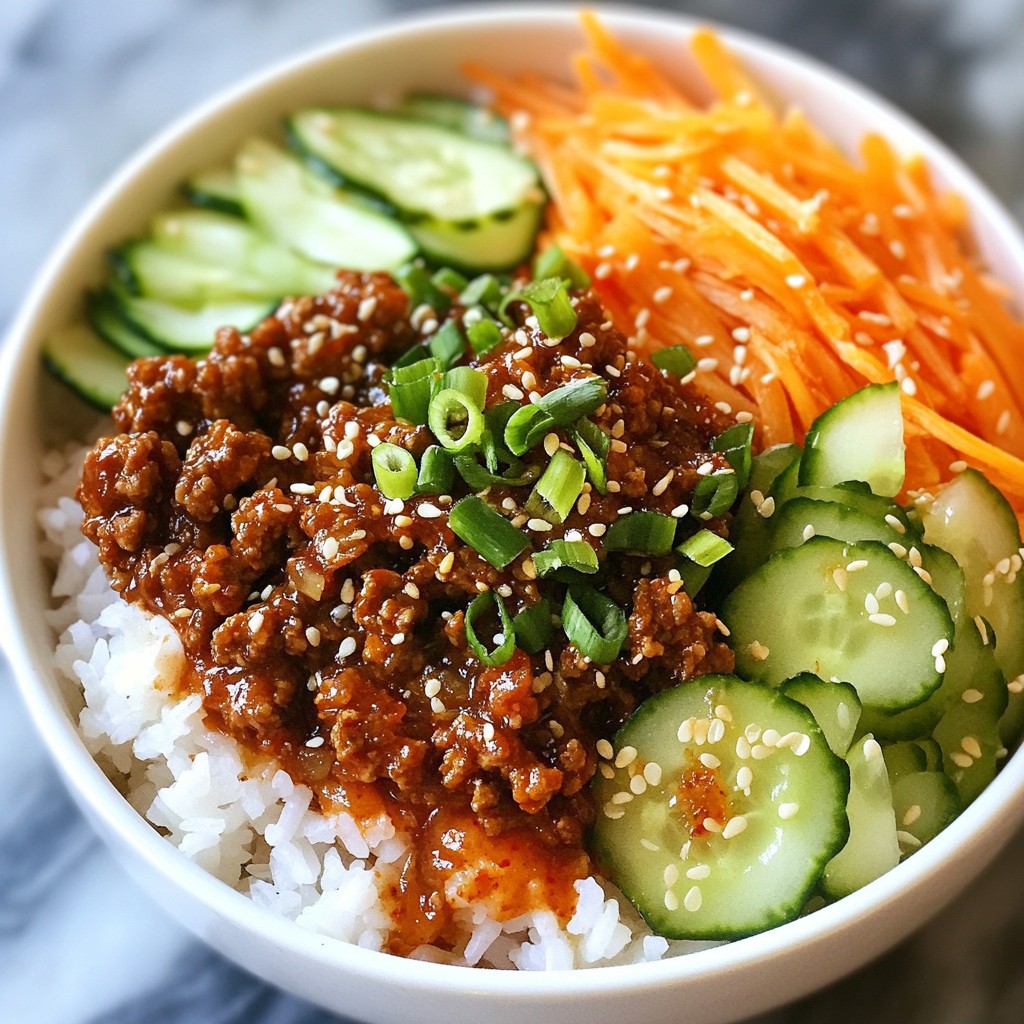
Craving a bold and tasty meal? Spicy Korean Beef Bowls are simple, quick, and packed with flavor! With just a few main ingredients like ground beef, gochujang, and fresh veggies, you can whip up this dish in no time. Whether you're a busy parent or a novice cook, this recipe will impress everyone at the table. Let's dive into how to create these delicious bowls that are sure to become your new favorite!
Why I Love This Recipe
- Bold Flavors: The combination of gochujang, sesame oil, and fresh ginger creates a robust flavor profile that is both spicy and satisfying.
- Quick Preparation: This recipe comes together in just 25 minutes, making it perfect for a weeknight dinner without sacrificing taste.
- Customizable: You can easily adjust the level of spiciness or add your favorite vegetables to make it your own!
- Healthy Ingredients: With the inclusion of fresh vegetables like cucumber and carrot, this dish is not only delicious but also packed with nutrients.
Ingredients
Main Ingredients
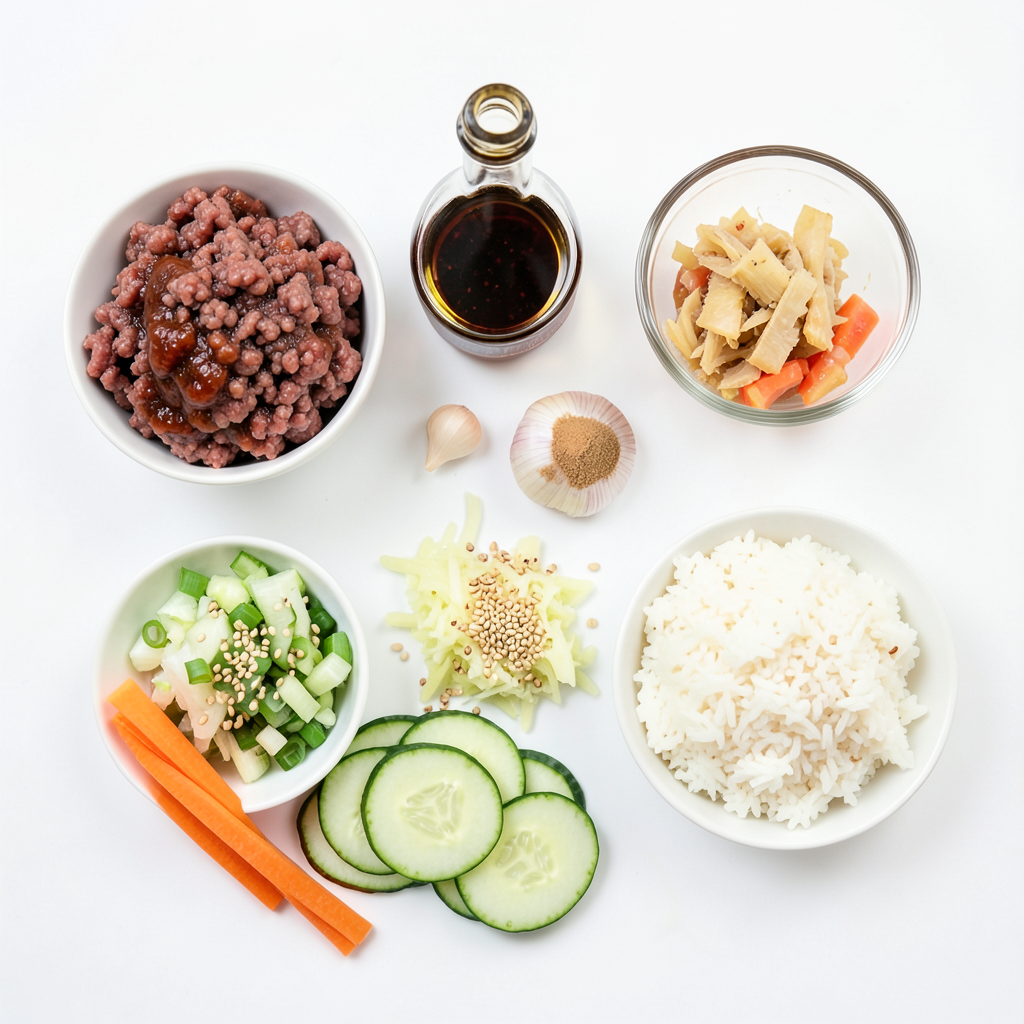
- 1 lb ground beef (80/20 blend)
- 3 tablespoons gochujang (Korean chili paste)
- 2 tablespoons soy sauce (low sodium)
- 1 tablespoon sesame oil
- 1 tablespoon brown sugar
Ground beef gives the dish a rich flavor. I like using an 80/20 blend for the right balance of fat. Gochujang adds that spicy kick, while soy sauce and sesame oil bring savory depth. The brown sugar helps balance the heat and adds a hint of sweetness.
Fresh Ingredients
- 4 cloves garlic, minced
- 1-inch piece ginger, grated
- 1 cup kimchi, chopped
- 2 cups cooked jasmine rice
- 1 cucumber, thinly sliced
- 2 green onions, chopped
- 1 tablespoon toasted sesame seeds
- 1 carrot, julienned
- Fresh cilantro for garnish (optional)
Fresh garlic and ginger enhance the dish's aroma and taste. Kimchi adds a tangy crunch, while jasmine rice serves as a base. I add cucumber and carrots for extra color and texture. Don’t forget the green onions and sesame seeds for added flavor and crunch. If you like, you can also add fresh cilantro on top.
Optional Ingredients
- Additional vegetables
- Alternative proteins
- Various garnishes
Feel free to customize your bowls! You can use any vegetables you like, such as bell peppers or broccoli. If you want a lighter option, try ground turkey or chicken. Adding different garnishes like sliced radishes or avocado can make your bowl even more delicious.
Step-by-Step Instructions
Preparing the Beef
Browning the Ground Beef Start by heating a large skillet over medium heat. Add 1 pound of ground beef to the skillet. Use a spatula to break it apart as it cooks. Let it brown for about 5 to 7 minutes. Once it is fully cooked, drain any excess fat if needed.
Adding Garlic and Ginger Next, add 4 minced garlic cloves and 1 inch of grated ginger to the beef. Stir them in and cook for 1 to 2 minutes. This will make your kitchen smell great!
Mixing in the Sauce
Incorporating Gochujang and Other Sauces Now, it’s time to add flavor. Stir in 3 tablespoons of gochujang, 2 tablespoons of low-sodium soy sauce, 1 tablespoon of sesame oil, and 1 tablespoon of brown sugar. Mix everything well.
Simmering for Flavor Let the mixture simmer for about 5 minutes. This step helps the flavors blend together. You will see the sauce thicken a bit, which makes the beef even tastier.
Assembling the Bowls
Layering the Rice and Beef While the beef simmers, prepare your bowls. Start with 2 cups of cooked jasmine rice. Place a generous serving at the bottom of each bowl.
Adding Toppings and Garnishes Top the rice with the spicy beef mixture. Then, add chopped kimchi, julienned carrots, and thinly sliced cucumbers. For extra crunch, sprinkle chopped green onions and toasted sesame seeds on top. If you like, add fresh cilantro for a burst of flavor. Serve your bowls right away for the best taste!
Tips & Tricks
Perfecting the Beef
- Choosing the Right Fat Content:
I like using ground beef with 80/20 fat content. This blend gives the meat great flavor and keeps it juicy. If the beef is too lean, it may taste dry. A little fat helps create a rich sauce.
- Flavoring with Spices:
To elevate the taste, always add garlic and ginger. They bring warmth and depth. Gochujang is key here too. It adds heat and sweetness. Don’t skimp on it! A little goes a long way.
Serving Suggestions
- Bowl Arrangement for Visual Appeal:
Make your bowls look beautiful! Start with a layer of jasmine rice. Then, add the spicy beef on top. Next, place the kimchi, cucumbers, and carrots in sections. This makes the dish colorful and inviting.
- Pairing with Sides:
Pair these bowls with a light salad or some pickled vegetables. This balance helps cut the spice and adds freshness. You can also serve with a cold drink like iced tea to cool your palate.
Cooking Tips
- Adjusting Spice Levels:
If you want less heat, use less gochujang. You can also mix in some honey or sugar to balance it out. Taste as you go! This way, you can get it just how you like it.
- Meal Prep and Batch Cooking:
This dish is perfect for meal prep. Make a big batch and store it in the fridge. You can enjoy it for lunch or dinner later in the week. Just reheat it gently, and it will taste great!
Pro Tips
- Choose the Right Beef: Using an 80/20 blend ensures a juicy and flavorful dish; the fat content helps in keeping the beef tender and moist.
- Adjust the Spice Level: If you're sensitive to heat, start with less gochujang and add more to taste. You can also balance the heat with additional sugar.
- Fresh Ingredients Matter: Using fresh garlic and ginger enhances the flavor profile of the dish. Pre-minced options can lack the same vibrancy.
- Customize Your Toppings: Feel free to add other toppings like avocado or radishes for extra texture and flavor, making the dish your own.
Variations
Ingredients Swaps
You can switch the ground beef for ground turkey or chicken. This swap lowers the fat but keeps the flavor. Turkey works well with gochujang. Chicken adds a lighter taste. Both options cook the same way as beef.
For a vegetarian version, try using tofu. Firm tofu absorbs flavors well. Press it to remove excess water. Crumble it into the skillet and follow the same steps as with beef. The flavor will still shine through.
Flavor Customizations
Feel free to experiment with different sauces or marinades. Soy sauce is a classic, but you can try teriyaki or hoisin sauce. Each will add a unique twist.
If you like heat, add chili peppers. Fresh sliced jalapeños or serranos give a spicy kick. You can also sprinkle red pepper flakes for extra heat. Adjust to your taste for a fiery bowl.
Serving Style
The dish can be served in various styles. Lettuce wraps are fun and fresh. Use large leaves to hold the beef and veggies. This makes for a crunchy, handheld meal.
If you prefer rice bowls, stick with jasmine rice. It complements the spicy beef well. You can also try cold noodle versions. They offer a different texture and are great for hot days. Top them with the same beef and veggies for a refreshing meal.
Storage Info
Storing Leftovers
Refrigeration Guidelines You can keep leftover spicy Korean beef bowls in the fridge. Place them in an airtight container. They stay fresh for 3 to 4 days. Make sure to cool them down before sealing the container. This keeps moisture from building up.
Freezing Options If you want to keep them longer, freezing is a great choice. Store the beef and rice separately in freezer-safe bags. They can last up to 3 months. When you’re ready to eat, thaw them overnight in the fridge.
Reheating Instructions
Best Methods for Retaining Flavor The microwave is quick but can dry out the beef. Instead, use a skillet over medium heat. Add a splash of water or broth to help steam. Stir often to heat evenly and keep the flavors intact.
Avoiding Texture Changes When reheating, avoid high heat. This can make the beef tough. If using the microwave, cover the bowl with a damp paper towel. This helps retain moisture and keeps the dish tasty.
Shelf Life
How Long Ingredients Last Ground beef lasts about 1 to 2 days in the fridge before cooking. Once cooked, it stays fresh for 3 to 4 days. Gochujang can last for months if stored correctly. Check the label for details.
Signs of Spoilage If the beef has an off smell or changes color, it may be bad. Cooked rice can also spoil. Look for a sour smell or a slimy texture. Always trust your senses. If in doubt, throw it out!
FAQs
What is Gochujang?
Gochujang is a thick Korean chili paste. It adds rich heat and a bit of sweetness. This paste is made from red chili powder, glutinous rice, fermented soybeans, and salt. You can find it in most Asian grocery stores. If you cannot find gochujang, you can use sriracha or chili garlic sauce. Mix these with a bit of sugar to mimic the taste.
How spicy is Spicy Korean Beef Bowls?
Spicy Korean Beef Bowls can be quite spicy. The heat comes from the gochujang. If you prefer less spice, you can adjust the amount of gochujang. Start with one tablespoon instead of three. You can also add more sweet ingredients like brown sugar. This will balance the heat with sweetness. Remember, the flavors work together to create a tasty dish.
Can I make this dish ahead of time?
You can prepare Spicy Korean Beef Bowls in advance. Cook the beef mixture and store it in the fridge. It stays fresh for up to three days. For meal prep, cook jasmine rice and keep it in a separate container. When ready to eat, reheat the beef and rice. This way, your meal is quick and simple.
You can create delicious Spicy Korean Beef Bowls using easy steps. Start with ground beef and key sauces like gochujang and soy sauce. Fresh ingredients like garlic, ginger, and kimchi enhance flavor.
You can customize with optional proteins and veggies. Follow tips to perfect your dish and serve it well. With smart storage, you can keep leftovers tasty. Enjoy making this fun meal that pleases everyone!